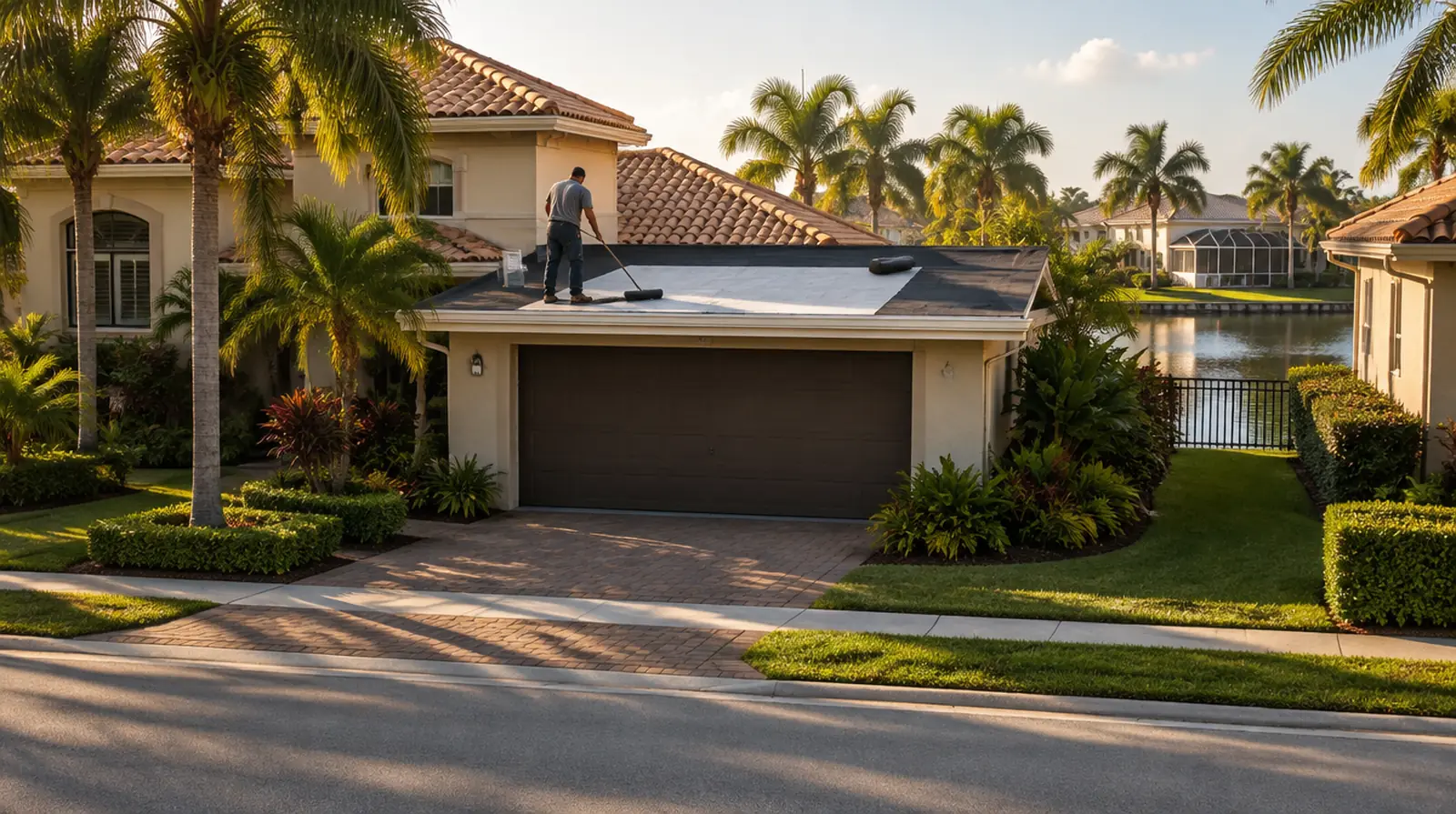
Why flat roof repair is so common in Weston
Many homes here pair a steep tile roof with low-slope sections behind the house. Those flat areas cover lanais, sunrooms, family room additions and sometimes the space between two roof wings. Water moves slowly across them, so any low spot, clogged drain or open seam has more time to cause trouble. The joint where a flat section tucks under the main tile roof is another frequent failure point, because two different systems have to be tied together with flashing.
Constant sun also takes a toll. Roof coatings and older modified bitumen surfaces dry out, crack and lose their protective granules. Once the surface goes, the layers below wear out quickly.
Signs your low-slope roof needs repair
- Water still sitting on the surface a day or two after rain
- Blisters, bubbles or soft spots underfoot
- Seams or edges that are lifting or curling
- Cracked or bare coating over the membrane
- Stains on the lanai ceiling or inside the addition
How we handle flat roof repair
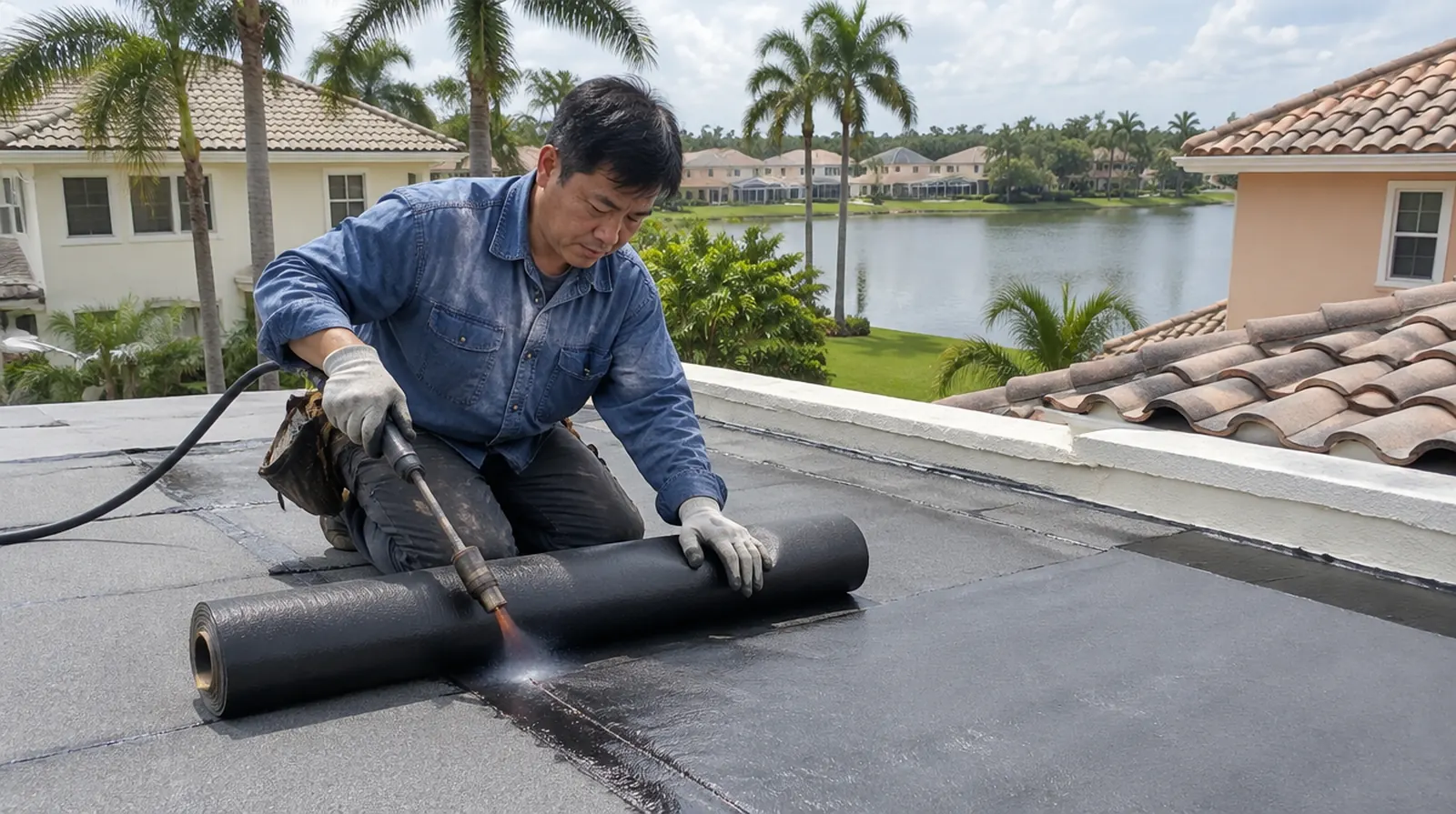
We start by finding out why water is getting in. Sometimes it is a single split seam. Sometimes the problem is ponding caused by a sagging deck or a drain set too high. Other times, the membrane has simply aged out. The fix depends on the cause.
For localized damage, we cut out the failed area, dry and prepare the surface, and install a new membrane patch that is heat-welded or adhered according to the system on the roof. Seams are pressed and checked. If the problem is the transition to the tile roof, we rebuild the flashing at that junction so water from the upper slope is directed onto the flat area cleanly.
When most of the membrane is worn, patching is a short-term fix. In that case, we will price a full membrane replacement so you can compare.
Dealing with ponding water
Ponding is more than a nuisance. Standing water speeds up wear on the membrane, adds weight to the structure, and finds every small flaw. Correcting slope with tapered insulation, adding or relocating drains, or adjusting scuppers can solve ponding at the source rather than just patching the damage it causes.
Choosing between flat roof repair and full replacement
We weigh a few things when deciding whether repair or replacement makes more sense on a low-slope section. How old is the membrane, and how much of it is still flexible? Is the deck dry and solid, or has water been sitting in it? Are there multiple patches already, each one a potential new leak? If only a small area has failed and the rest is healthy, a repair is a good value. If the surface is brittle everywhere, putting money into patches tends to postpone the inevitable. In either case, we show you photos and explain the reasoning so you can make the call.
Timing a flat section with other roof work can also save effort. If the main tile roof needs attention in the next few years, replacing the lanai membrane at the same time keeps both systems tied together cleanly.
Flat roof repair FAQs
Can a roof coating fix my flat roof?
Coatings can extend the life of a membrane that is still sound. They do not fix split seams, rotten decking or ponding caused by poor slope.
Is my lanai roof considered flat?
Most lanai roofs in Weston are low-slope rather than truly flat. They have a slight pitch, but not enough for tile or shingles to shed water reliably.
How long does a flat roof repair take?
Small patches and seam repairs are often done in a single visit. Larger sections or slope corrections take longer and depend on weather.
Can you match the existing membrane?
We use compatible materials so the repair bonds with what is already there. Color may differ slightly on older surfaces.
Have a low-slope leak?
Call (954) 329-1713 for a free flat roof repair look.