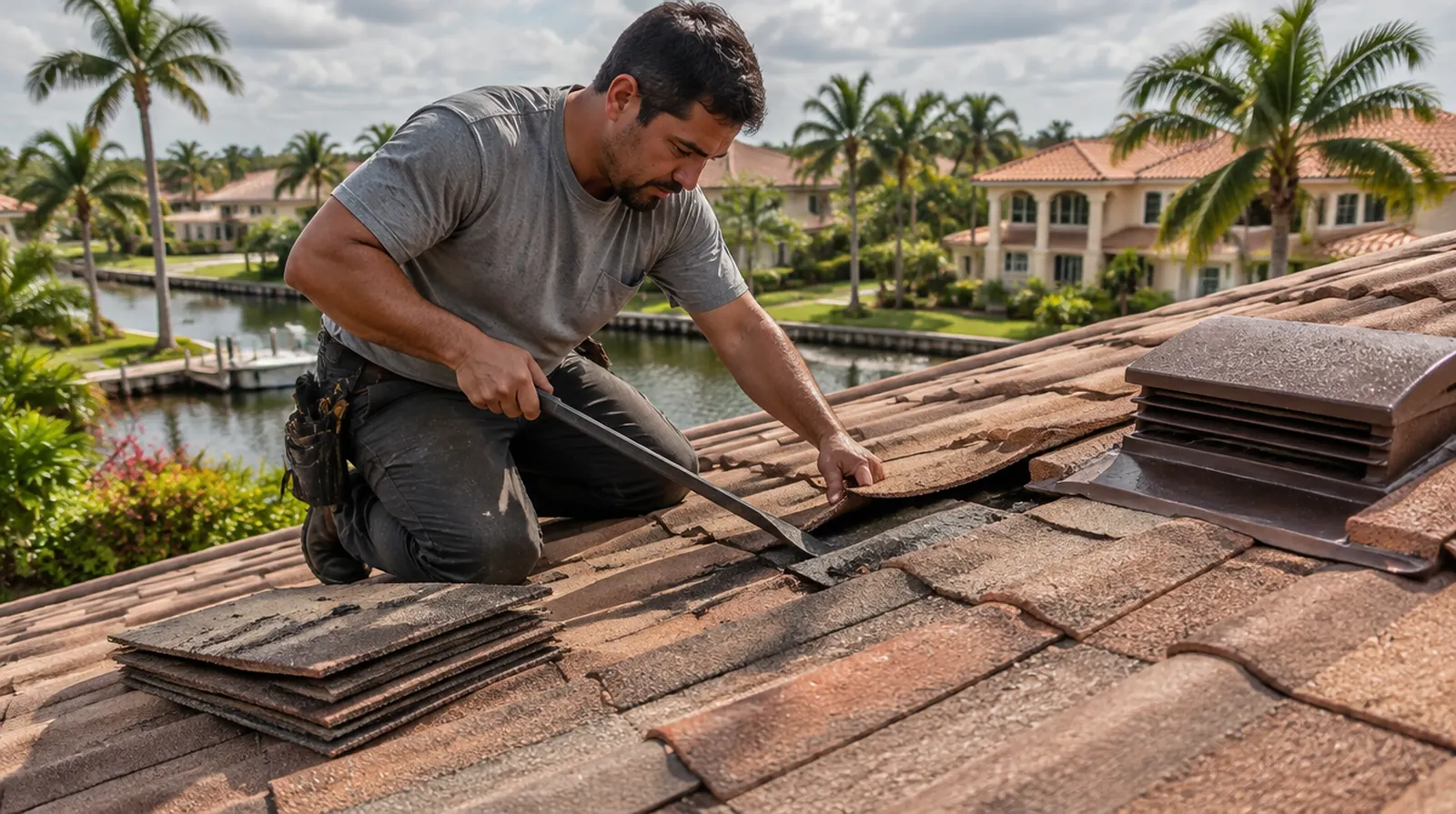
What roof repair covers on Weston homes
Repairs here usually fall into a few categories. On tile roofs, we replace cracked or displaced tiles, reset ridge and hip pieces whose mortar or foam has let go, and rebuild sections where the underlayment has failed in a limited area. On shingle roofs, we replace lifted or missing tabs and reseal exposed nail heads. On any roof, we reflash where the roof meets stucco walls, chimneys, skylights and vent pipes.
We do not recommend a repair just because it is cheaper. If the problem is part of a wider failure, we tell you, and we explain what would happen if you patch it anyway. Sometimes a repair still makes sense as a bridge to a planned roof replacement a few years out.
Signs your Weston roof needs repair
- Tiles that are cracked, shifted or sitting at a different angle from their neighbors
- Ridge caps with gaps where mortar has crumbled away
- Granules collecting in gutters or at downspout outlets on a shingle roof
- Water stains near where an upper wall meets a lower roof section
- Daylight visible through the decking from inside the attic
If any of these show up after a storm, it is worth getting someone on the roof before the next round of rain.
How we approach a roof repair
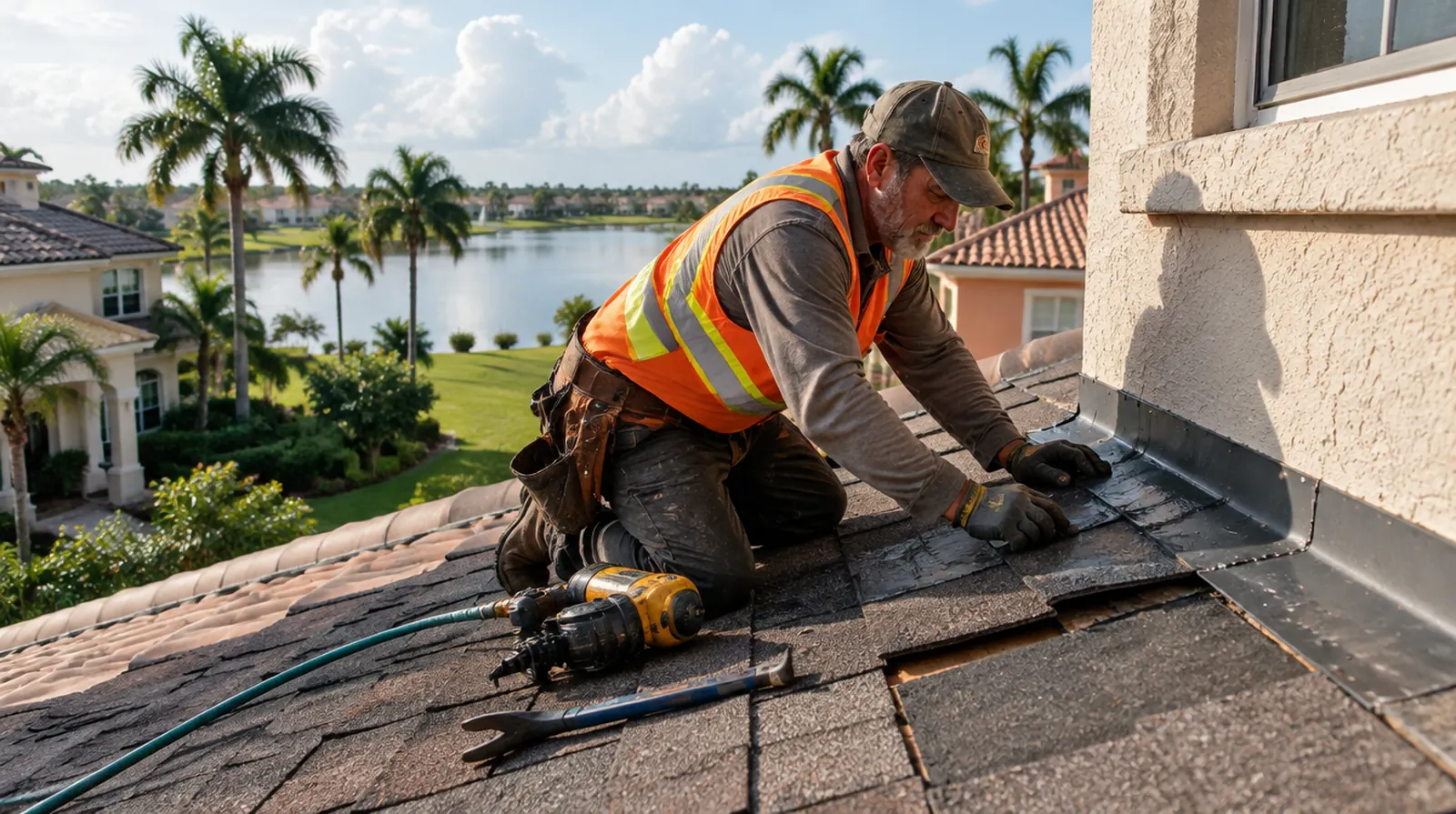
We start by finding the actual cause. A loose tile might be the symptom, but the reason it moved could be a broken fastener, a failed foam pad or a deck that has softened beneath it. Once we know the cause, we lift the surrounding material carefully so we do not break healthy pieces, fix what is underneath, and reinstall or replace the surface.
Matching matters on tile roofs. Many Weston homes use profiles and colors that have changed over the years, so we try to match from salvaged tile or the closest available product. If a perfect match is not available, we will tell you before work begins and can suggest pulling matching pieces from a less visible slope.
When water is already coming in, a general repair might not be enough. Our leak repair process traces water from the interior stain back to the entry point, which can be several feet uphill.
Roof repair and the Florida climate
Constant UV and heavy seasonal rain mean that small problems do not stay small for long. A crack in sealant around a vent pipe might be harmless in a dry month and leak heavily during the first big storm of the wet season. Humidity also means that water trapped under tile or shingles can lead to decking rot and mold in the attic faster than it would in a drier climate.
Wind is the other big factor. Storm gusts get under loose edges and can lift neighboring pieces as well, so a repair that is put off can grow from a few tiles to an entire section.
What affects roof repair pricing?
- Type of roofing material and availability of matching pieces
- How much underlayment or decking has to be replaced
- Height, pitch and how easy it is to reach the damaged area
- Number of separate problem spots on the roof
We give you a written price after looking at the roof, and that price does not change unless you add to the work.
Roof repair FAQs
Can you repair a tile roof without breaking more tiles?
Some breakage is always possible because older tile can be brittle, but careful handling keeps it to a minimum. We bring replacement pieces to cover any that crack while we work.
Is it worth repairing a roof that is getting old?
It depends on the condition of the underlayment. If most of it is still sound, a repair can buy several more years. If it is failing everywhere, repairs become a recurring cost, and we will tell you that honestly.
Do you fix the flat section behind the house too?
Yes. Low-slope sections over lanais and additions are part of many repair calls. If the membrane itself is worn out, we may recommend dedicated flat roof work.
How long does a typical repair take?
Many repairs are finished in a single visit. Larger sections that need new underlayment may take longer, and we give you a timeline with the estimate.
Need a roof repair this week?
Call (954) 329-1713 or send photos through the form for a free estimate.